
Coeur d’Alene Busted Mugshots
The Coeur d'Alene Police Department polices the city, yet bookings land in a different system. When CDA PD brings someone to county custody, the Kootenai County Sheriff's Office records it. So the sheriff's current inmate list and Daily Press Log come first for custody questions. The original incident packet stays with the city. Any booking photo sits with whichever office holds that booking record.
Coeur d'Alene is the county seat and the area's largest city. The 2025 Census estimate put it at 58,179, up from 54,628 in 2020. The figures come from Census QuickFacts. That count describes residents, not arrests.
Arrest, booking, and court files for Coeur d'Alene often live with three different offices. Know which one you need before you ask. A city incident result never doubles as a county custody result.
Where Coeur d’Alene Busted Mugshots Appear
The city does not publish a daily booking or mugshot log. For incident context, the Crime Map and the weekly crime reports are what exist. Neither shows a live custody roster. The KCSO documents, though, do list city arresting agencies beside the county jail fields.
| Channel | Photo status | Use |
|---|---|---|
| CDA PD crime map and report | No routine booking photo | Incident or trend context, not current custody |
| KCSO Current Inmate List | No visible routine photo field | Current county custody and arresting-agency fields |
| KCSO Daily Press Log | No visible photo in the checked window | Displayed 5 a.m. to 5 a.m. recent activity |
| CDA Records Unit | Ask the custodian about any releasable image | City arrest packets and reports |
| Local news | Selected story images only | Context, not a complete roster |
| Private county pages | Unofficial and may be stale | Discovery only, followed by KCSO verification |
Start with official sources, always. A private site calling an entry "Coeur d'Alene" proves nothing about who created the record or whether the person is still locked up. The CDA PD Crime Map supplies the city incident interface shown below.
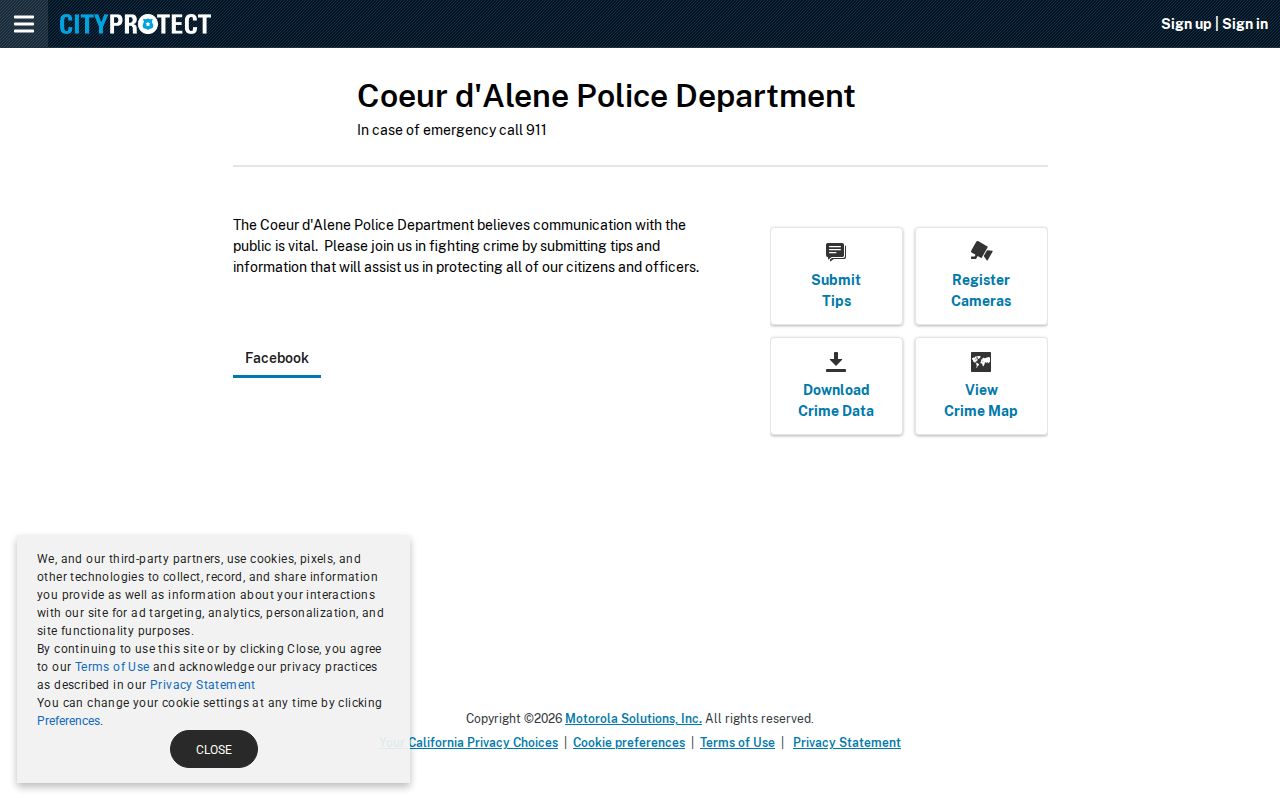
The map gives useful incident context. It cannot replace the KCSO custody documents.
Busted in Coeur d’Alene: County Booking
Work the custody path first, then the city record. KCSO's list can include CDA PD arrests, since the county jail is where bookings happen. The city crime map or weekly report may show an incident yet say nothing about who is still in custody.
- Open the KCSO Current Inmate List and note its current timestamp.
- Use the Daily Press Log for the displayed recent window.
- Compare the CDA PD agency field, date, location, offense, case, and bond. Similar names are not enough.
- Request the city arrest packet from CDA PD and a county booking record or photograph from KCSO when the event reached county custody.
- Check iCourt for the later case result. A release from the roster does not state that charges were dismissed.
The Kootenai County booking and records path carries the full roster, press-log, photo-policy, and state/federal distinctions.
Coeur d’Alene Police Records
Here is a detail most people miss. CDA's Records Unit handles arrest packets every morning, then sends them along to district court and to city or county prosecutors. That is a records pipeline, not a public booking feed. So where do you go? For a city incident or arrest packet, use the city's JustFOIA portal. Need a county jail booking record or a photo instead? That request goes through KCSO's JustFOIA portal.
Coeur d'Alene Police Department
3818 Schreiber Way
Coeur d'Alene, ID 83815
208-769-2320
Records: 208-769-2318
Non-emergency: 208-446-1854
The records counter is open weekdays, 8 a.m. to 5 p.m. Call ahead to confirm routing and any fee before you send a request.
- Give CDA PD the full name, date, location, case number, and any other lawful identifier.
- Ask for the incident or arrest packet and state whether the request concerns a city report or a county booking.
- Send the separate KCSO request for the booking record or photograph. Do not ask CDA PD to certify that it holds a county jail image unless the agency confirms that.
Two agencies, two phones, two jobs. City questions about an arrest packet go to the CDA Records Unit during its weekday counter hours. Questions about county custody or a KCSO-held photo belong with the sheriff or jail route instead. Save both request confirmations. One event can carry different case numbers and booking identifiers on each side, so the paperwork from each office is worth keeping.
Coeur d’Alene Crime Coverage
News travels fast in Coeur d'Alene. Coverage lands in the Coeur d'Alene Press, Kootenai County News, KHQ, and other regional outlets. A dated KCSO blotter story is context, not a live jail list. Still, one old Press piece proves the sheriff's office will release booking photos when a news event calls for it. Arrest News maps the countywide outlets and shows where each one draws the line on photos.
Private sites deserve caution. RecentlyBooked and Mugshots.com may carry a countywide page that includes Coeur d'Alene, but neither speaks for CDA PD. Before repeating a claim, check the arresting agency, the KCSO custody documents, and the court file. News stories get corrected or updated later, and a custody PDF can refresh at the same URL whenever the jail revises it.
For the city records interface shown below, the CDA Records Unit is the source.
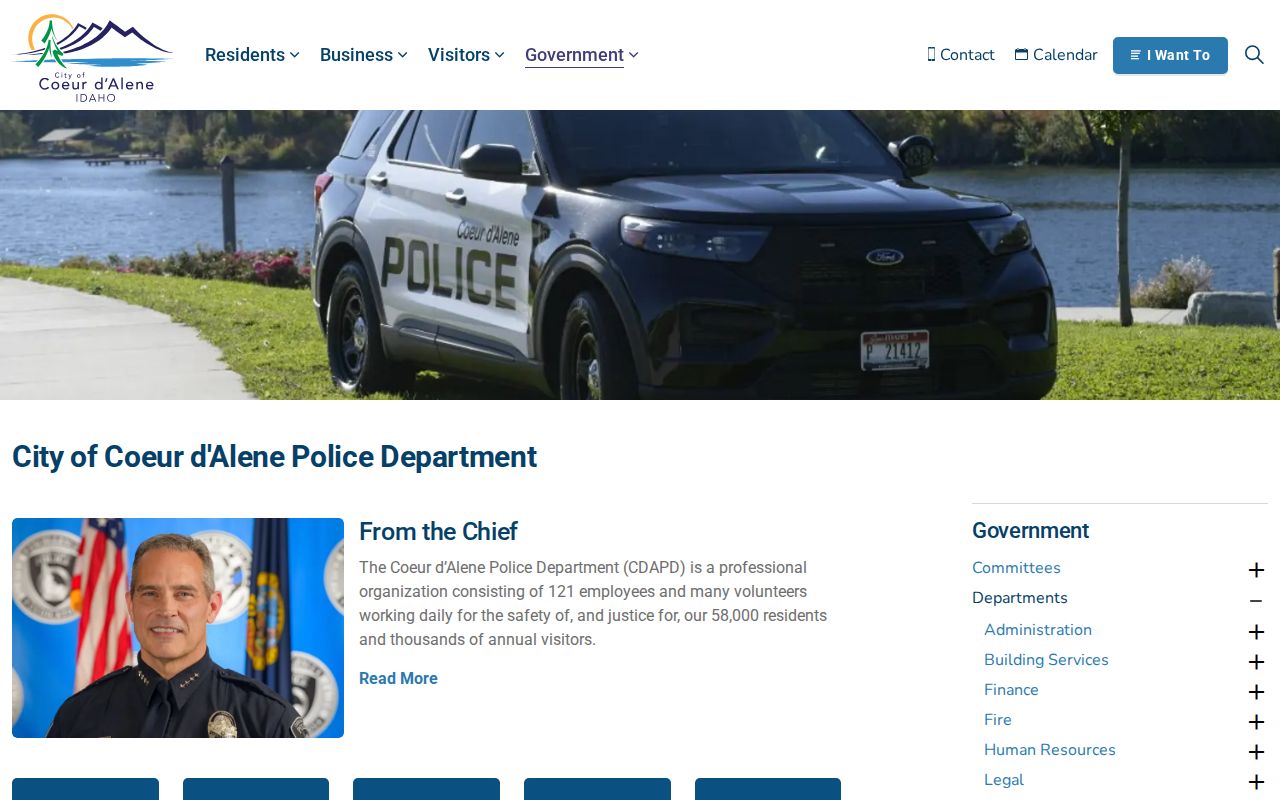
The city records route and the county booking route serve different custodians.
Why CDA Arrest Packets Move Each Morning
Why does one system hold the arrest report while another shows booking status? Morning processing at CDA's Records Unit explains the split. Arrest packets move to district court and prosecutors each day. County custody data stays with the jail custodian. A city trend report is no substitute for either record.
The same handoff matters when a private site tags someone as "Coeur d'Alene." That tag could mean the arrest location, the arresting agency, or just a news story. Sort out which one applies before you file a correction or a records request.
CDA Busted Records Compared
One arrest leaves several trails. The same event can appear in a city system, a jail system, and a court file, and each record tells only its own part. Keeping the record owners straight stops a city incident write-up from being mistaken for a jail status or a court outcome. The source field matters as much as the name on the page.
| Record owner | What it may show | What it cannot establish alone |
|---|---|---|
| CDA Police Department | Incident or arrest packet, location, officers, narrative, and city case identifiers | Current county custody or a releasable KCSO booking photograph |
| Kootenai County Sheriff’s Office | County jail custody, incarceration and release fields, arresting agency, offense, case, bond, and a response to a photo request | That a charge became a conviction or that CDA PD holds every related report |
| Kootenai District Court | Case events, hearings, filings, and later disposition when publicly available | Whether a person is currently in the county jail or whether a news image is authentic |
Can the CDA crime map tell you if someone is still locked up? No. The map tracks incidents and trends, not people. Custody answers live elsewhere: the KCSO current inmate list covers the county jail, the Daily Press Log covers its own short window, and the Idaho iCourt system holds the case file once charges reach a courtroom. The CDA weekly crime report belongs in the same trend category. It shows where and when activity clustered during a given week. It cannot become a person-by-person booking roster, no matter how closely you read it.
Coeur d’Alene Court Status
For court work, start with the Kootenai court resources page and Idaho iCourt. Between them you can pull calendars, case details, and outcomes as a case moves along. Watch for name collisions in searches, since common surnames can return several people. A sealed or delayed file may also keep part of the story out of public view. The District Court public-records route is its own channel, separate from the CDA Police Department and the KCSO roster. If a public view looks thin, ask the court records office for a copy and cite the case number when you have one. Keep the city police packet and the county custody record tied to their own dates and custodians. A blank search result and an active jail row each tell only part of the story.
CDA Busted Booking and Release
A Coeur d'Alene arrest can appear in the Daily Press Log and then linger on the Current Inmate List for weeks. It can also vanish from the current list after a release or transfer. The incarceration dates there often run older than the press-log window, so "current" means still in custody, not booked today. A city incident record can stay open even after the county entry changes. That five o'clock cutoff on the Daily Press Log matters when you're chasing a fresh arrest. Something outside the displayed window may never appear there, even if the person stays jailed. For historical booking records or photo inquiries, a focused KCSO request is the right route. Does a KCSO release erase the city arrest packet? No. Release changes custody status and nothing else. The CDA PD incident record stands on its own, so follow each source by its own dates. A crime-map marker can also outlast the event or mark a category rather than an actual arrest. Treat it as context until the agency packet, county custody source, or court record fills in the details. That caution counts double when several people share a name, or when a news story leans on a neighborhood label instead of naming the arresting agency.