
Kootenai County Wanted Fugitives
Start with the Kootenai County Sheriff's Office Active Warrants page. That is the official hub. It links to two documents, one for felonies and one for misdemeanors. Each file carries its own printed date or time. The sheriff's guidance is plain: confirm a warrant through KCSO or the local jurisdiction, and let trained officers handle any contact with a wanted person.
"Wanted" is its own status. It says nothing about custody or sentencing. Someone can appear on the warrant report yet never show on the current inmate list. Warrants also get recalled, served, amended, or held up. The next refresh may look quite different. That is why the report date matters. It is part of the record itself, not a decorative stamp.
A warrant listing is a tool for law enforcement. Verify its current status with the agency, and leave any apprehension to the professionals.
Kootenai Warrant Listing Fields
The felony report lays out fields that separate a wanted list from a jail roster. Physical descriptions can help you rule out a case of mistaken identity. They cannot confirm one on their own. One caution bears repeating. Never pair a private photograph with a warrant name. That habit causes real harm, and the report never asks for it.
| Field | What it describes |
|---|---|
| Name and identity field | The listed name and year-of-birth or age-related identity detail. Confirm directly with KCSO. |
| Height, weight, hair, and eyes | Physical descriptors in the report. They are not an identity guarantee. |
| City and state | Location information printed in the report. It is not a private address or proof of current location. |
| Wanted-for and charge detail | The report’s description of the warrant basis and alleged offense. |
| Issue date and status | When the warrant was issued and how the report labels it at publication. |
| Case, class, warrant number, and statute | Identifiers for verification with the listed jurisdiction or court. |
| Photo, if a future report carries one | Call it a warrant-report image unless the source identifies it as a booking photo. Do not rehost it here. |
How to Read Kootenai Wanted Reports
Treat the official page as a live report rather than a gallery of faces. Two separate PDFs cover felonies and misdemeanors, and the printed date or time on each tells you how fresh the data is. Recognition is where people get into trouble. The right move is a call to the listed agency or a tip through the anonymous route KCSO provides. Nothing more.
- Open the KCSO Active Warrants page and choose the felony or misdemeanor report that matches the question.
- Read the report date, name, identity field, physical descriptors, charge text, case number, and warrant number together.
- Do not approach, follow, contact, or try to detain the person. Use the local jurisdiction or KCSO tip path.
- To check custody separately, use the Kootenai County custody and booking records. A later booking is a new source event.
- Use iCourt or the issuing court to learn about a case. Do not call a wanted entry a conviction.
No warrant image appears on this page. A link back to the source keeps the report where it belongs, on the sheriff's own system, where any later change stays visible and verifiable.
The Active Warrants page is the source for the official report interface shown here.
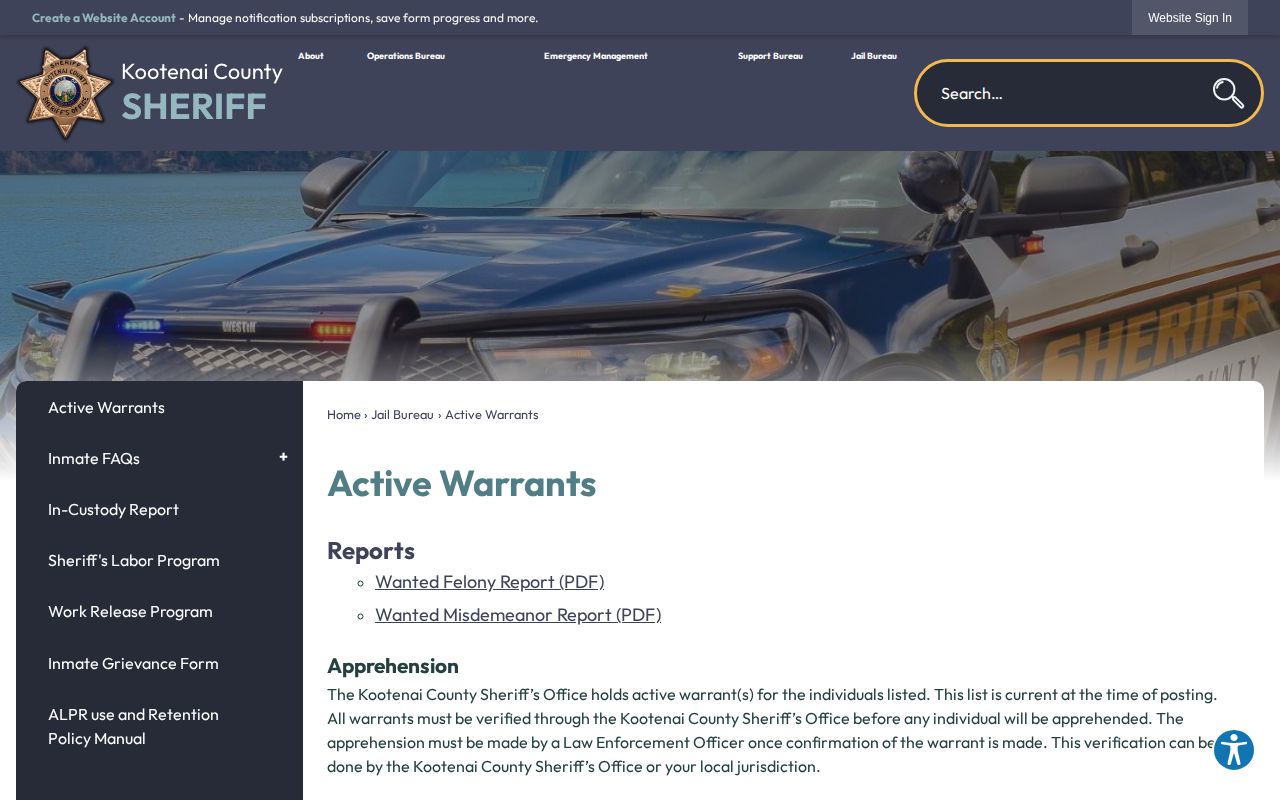
What you see here is the official route and its verification warning. It is not a lineup of wanted faces.
Safe Kootenai Warrant Tips
KCSO points anyone with information toward the proper local jurisdiction or its anonymous-tip path. There is no universal reward amount posted, no blanket anonymity promise, and no separate countywide Crime Stoppers program advertised on the source. Follow the instructions on the official Active Warrants page. Share only what you lawfully know.
Kootenai County Sheriff's Office
2451 W. Dakota Avenue
Hayden, ID 83835
208-446-1300
Danger unfolding right now? Use the emergency channel. A wanted-person tip, on the other hand, goes through the law enforcement or anonymous route on the official warrant page. Skip any private mugshot listing. That is not a tip line, and messages left there reach no one who can act.
Some ground rules protect everyone involved. Do not post a private address. Do not repeat an unverified rumor. Never use social media to confront a person on the list. A tip does its job even when you cannot vouch for every detail. It only has to reach the right hands.
Wanted List vs Specific Warrant
The felony and misdemeanor reports are curated documents, not complete court files. A missing name proves nothing about the absence of a warrant. A listed name proves nothing about current custody. For answers on one person, go to KCSO or the jurisdiction that issued the warrant. Ask for the warrant number, the case, the issue date, the current status, and the next lawful step.
Here is a quirk worth knowing. An inmate row on the current KCSO list can reflect a warrant arrest even when that person never appeared on the public wanted report. The current list and the Daily Press Log answer custody questions. The warrant report answers a different one: wanted status. Keep those labels straight when you correct a record.
How to Check a Kootenai Warrant
One specific warrant deserves a real verification path. Guessing from a similar name invites trouble. Begin at the KCSO Active Warrants page, then follow the report's direction to the issuing local jurisdiction when needed. A document can lag behind a recall, a service, or a court change. The printed date and the confirmation call work best together.
- Write down the person’s complete name and any lawful identifying details you already have, such as date of birth, report city, case number, or warrant number.
- Open both the felony and misdemeanor report paths when the status is unclear. Read the printed date, physical descriptors, charge text, case, class, and warrant number together.
- Compare the entry with the Idaho iCourt case search when a case number or matching name is available. A court result can add context but does not replace KCSO’s current verification.
- Call KCSO or the issuing jurisdiction to confirm whether the warrant remains active and which office can explain the lawful next step. Ask the office that created the entry rather than a private listing.
- If the person is you, or you are acting for the person, ask a lawyer or the court about surrender, appearance, recall, or another lawful resolution. Do not arrange a confrontation or attempt an apprehension.
The honest answer, most of the time, is that the report needs direct confirmation. That phrasing saves you from an outdated PDF, from a common name, and from confusing a wanted entry with a current jail booking.
Kootenai Warrant Types
KCSO's public materials suggest three useful categories for checking. They hardly form a complete legal taxonomy. The first two are the separate felony and misdemeanor report documents. The third is a custody label that may attach after an arrest. Never read it backward as proof that the person is still wanted.
| Public category | Where to verify it | What it does not prove |
|---|---|---|
| Felony warrant report | KCSO’s separate felony PDF, with report date, charge, case, class, warrant number, and status fields | Current custody, guilt, or that every field is still active after the report date |
| Misdemeanor warrant report | KCSO’s separate misdemeanor PDF and the local jurisdiction named by the report | That a name absent from the report has no warrant or that the report is a complete court history |
| Warrant-related custody entry | KCSO Current Inmate List or Daily Press Log, read with the arresting agency and date | That the public wanted report is current, or that the underlying case ended in conviction |
Let the category guide your search. Match each warrant to its proper source. Keep the report date with any note you make. If the office will not confirm a status by phone, try a records request or the court-clerk route instead. Agency rules and exemptions still apply. So expect the process to vary from one office to the next.
Kootenai Warrant Report Freshness
The printed date and time on a warrant report are your best freshness markers. KCSO promises nothing about refresh frequency. No fixed interval can be counted on. Even a report that looks current may lag behind, since an arrest, recall, or court action can change things without warning.
Save the report date with any search note. Check again before taking any lawful step. Never trust a cached screenshot or an old page to tell you a warrant is still active. The official Active Warrants notice controls. Verify with KCSO or the local jurisdiction, and leave any apprehension work to law enforcement.
One wrinkle remains. A later KCSO inmate entry might show a booking that followed a warrant arrest. That still tells you nothing about the warrant's legal history. Keep custody documents, warrant reports, court records, and final dispositions as separate sources.
Felony and Misdemeanor Reports
KCSO publishes felony and misdemeanor wanted reports as two files. The felony report lists charge detail, case number, class, warrant number, statute, issue date, and status. The misdemeanor file is separate. It may refresh on its own schedule. Go by each report's printed date rather than merging the lists into one count.
A warrant is a court or agency request for action. It is not an arrest record. When a report changes, the new official document is the one that counts. A court record can fill in later case details. Reading one will not make a stale list current.
Pull the felony warrant report and the misdemeanor warrant report as two distinct sources.
Federal Custody Is Separate
A KCSO row marked U.S. Marshal or another federal agency stays a custody fact. Nothing more. The Bureau of Prisons locator returns federal custody fields, with no routine public mugshot. The ICE locator has its own identity limits and no general public photo search.
Use each federal locator only for its own custody question. Someone can leave county custody before a BOP result appears. A federal agency the BOP system does not cover may also hold that person. Local news can describe a federal or immigration event. It cannot settle the final outcome.
The BOP locator powers the separate federal search interface shown below.
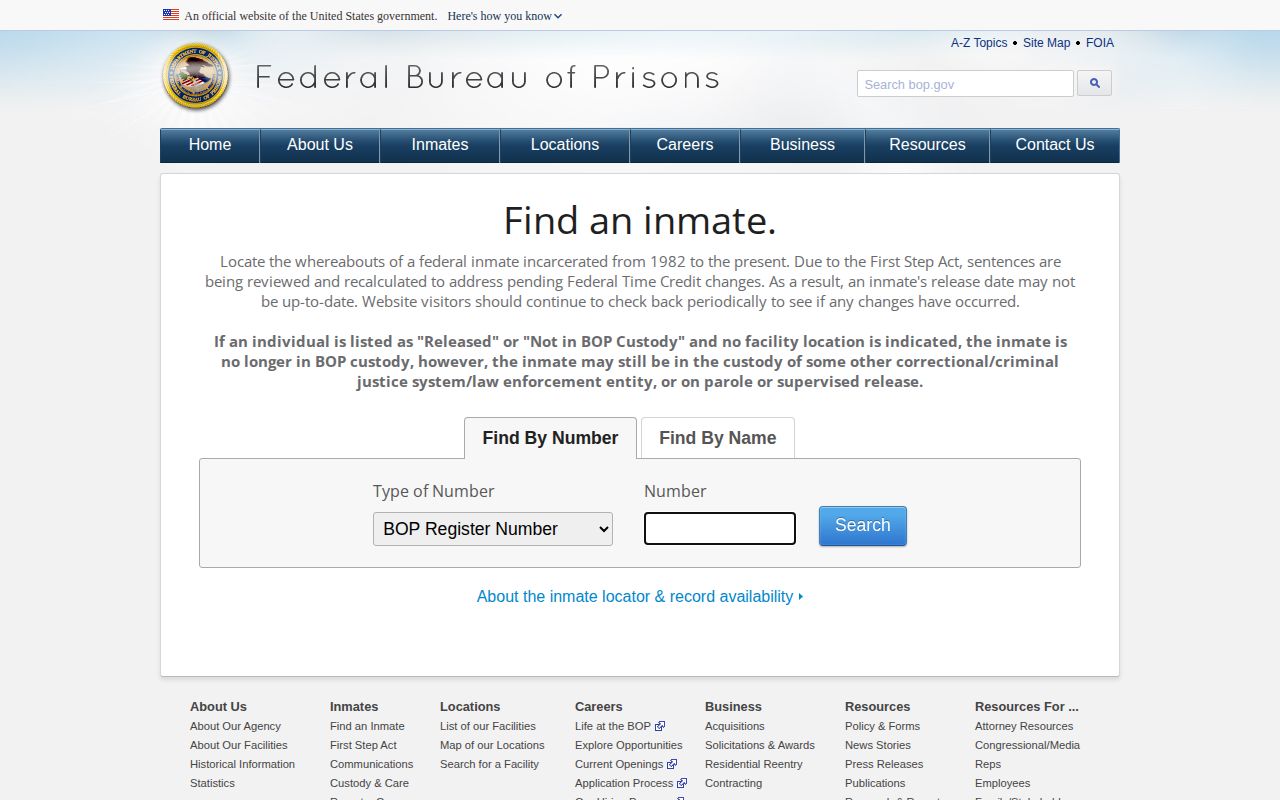
Think of the federal locator as an identity and custody tool. It is not a Kootenai wanted list or a source of booking photos.